

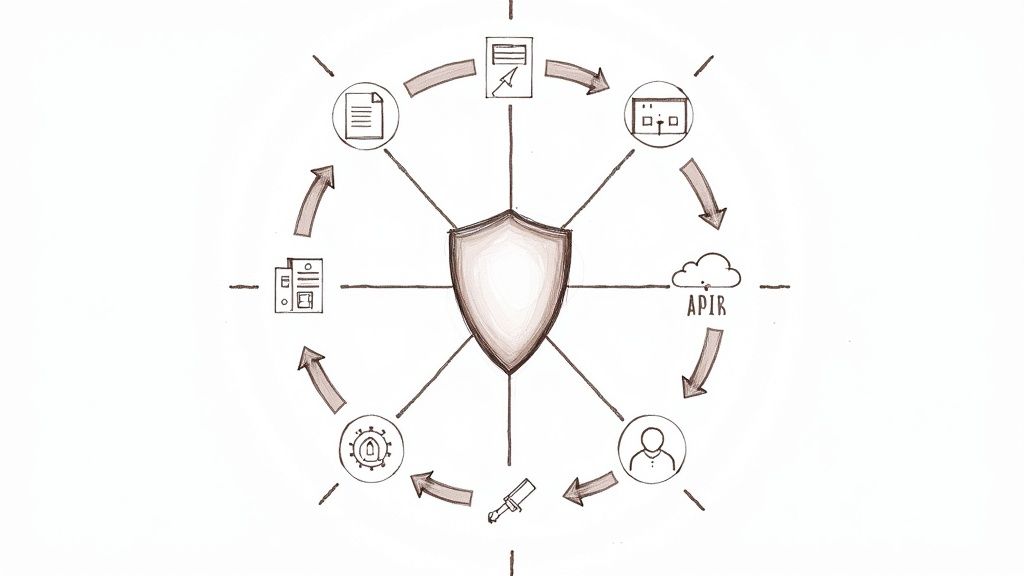
I remember this one client. Their file upload feature seemed totally harmless, but it turned into a gaping backdoor for an attacker. It wasn't some wild, zero day exploit you see in movies; it was a simple misconfiguration that just spiraled out of control. This story is surprisingly common in the startup world. You are building fast, shipping features, and security can feel like a brake pedal you really do not want to press. But what if we thought of it as a seatbelt instead?
This is where penetration testing comes in, not as a scary, judgmental audit, but as a collaborative sparring partner. A good pen test is just a controlled simulation of a real world attack, designed to find the cracks in your walls before the bad guys do. It is a critical exercise for any company building modern software, especially if you are handling sensitive user data or running complex cloud native infrastructure. To ensure you are always getting better, organizations should regularly conduct penetration testing on high-risk systems.
This guide is my attempt to share some humane, actionable penetration testing best practices that go beyond generic checklists. We will take a journey together: from the absolute first step of getting written permission and defining the scope, all the way to finding the vulnerabilities, and more importantly, learning how to fix them for good. We will cover methodical approaches for web apps, cloud environments, and even those new GenAI systems. Forget vague advice; this is a practical playbook designed to help your engineering team build more resilient products without slowing down innovation. Let's dive in.
1. Get It In Writing: Authorization and Scope
Before you send a single packet or test a line of code, the most critical step is securing formal, written authorization. This isn't just bureaucratic red tape; it is the foundational legal and ethical contract that separates a legitimate security assessment from an illegal hacking attempt. Think of it as the difference between a building inspector with a clipboard and a burglar with a crowbar. This document, often called the Rules of Engagement (RoE), is your "get out of jail free" card and the blueprint for the entire project.

This step is completely non negotiable for compliance frameworks like HIPAA and PCI DSS, where documented approval is mandatory. Financial institutions also face strict rules about documenting test authorizations. The goal is to kill any ambiguity, protect both the testing team and the client, and ensure the test actually yields valuable results without causing an accidental outage. A well defined scope stops testers from accidentally wandering into production systems or third party services, which could have some pretty severe legal and financial consequences.
Why This Matters So Much
A clear, legally reviewed RoE document is a cornerstone of professional penetration testing best practices. It builds trust and gives everyone a clear framework for communication, especially when you find a really critical vulnerability at 3 AM. It ensures that everyone, from the engineering team to the C suite, is on the same page about the objectives, boundaries, and potential risks of the test.
How to Actually Do It
To put this into practice, your authorization and scoping document should spell out:
- Objectives: What is the real goal here? Are we hunting for specific vulnerabilities, testing the incident response team, or trying to get a compliance certificate?
- Scope Definition: List every single IP address, domain name, application URL, and cloud account that is in scope.
- Out of Bounds Systems: Just as important, explicitly list what is not to be tested. This often includes production databases, third party vendor APIs, or the CEO's email server.
- Timeline: Define the exact start and end dates and times for testing activities, and please, for everyone's sanity, include time zones.
- Emergency Contacts: Put together a 24/7 contact list for both the client and the testing team in case something goes sideways.
- Stakeholder Approvals: Make sure the document is signed by someone with the actual authority to approve this kind of testing, like a CTO or CISO.
2. Be a Detective: Reconnaissance and Information Gathering
A successful penetration test is built on a mountain of high quality intelligence. Before an attacker, or a tester, tries to breach a system, they first map the terrain. This phase, known as reconnaissance, is all about discovering and collecting as much data as possible about the target. It is the digital equivalent of a spy gathering blueprints and guard schedules before breaking in; the more you know, the higher your chances of finding an unlocked door.
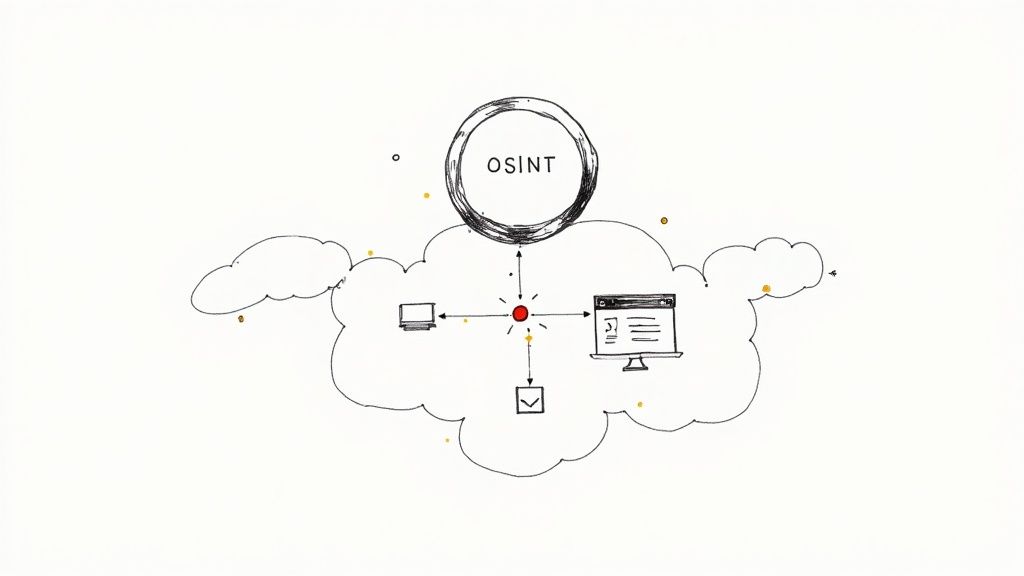
This process has two flavors: passive reconnaissance, which is collecting public info without directly touching the target's systems, and active reconnaissance, which involves direct interaction like port scanning. For startups, this phase can turn up all sorts of forgotten treasures: old subdomains, exposed cloud storage buckets, or sensitive keys accidentally committed to a public GitHub repo. Finding this low hanging fruit early lets testers build a much more effective and targeted attack plan, just like a real world adversary would.
Why This Matters So Much
Thorough reconnaissance is one of the most vital penetration testing best practices because it directly feeds into every other phase of the test. A meticulously gathered inventory of assets, technologies, and even employee names provides a rich menu of potential attack vectors. Skipping this step is like trying to navigate a new city without a map; you might stumble onto something interesting, but a systematic approach is far more likely to reveal the hidden alleys and critical weaknesses.
How to Actually Do It
To run an effective reconnaissance phase, you need a mix of automated tools and good old fashioned manual digging:
- Map the Digital Footprint: Use tools like Shodan to find exposed services and devices. Perform DNS enumeration with tools like
sublist3roramassto discover all the subdomains they forgot they owned. - Leverage OSINT: Use Google dorking to find publicly exposed documents, login pages, and revealing error messages. Analyze social media and professional networks for employee names, roles, and technologies they love to talk about.
- Start Passively: Begin with techniques that will not set off any alarms. This means analyzing public records, job postings, and source code on platforms like GitHub to understand the tech stack.
- Systematic Documentation: Keep detailed, organized notes of every little thing you find. I like to create network diagrams and asset inventories from the data to visualize the attack surface and spot high value targets.
- Transition to Active Scanning: Once you have gathered all you can passively, it is time to move to active methods like port scanning (
nmap) and web directory brute forcing (dirb,gobuster) to confirm services and discover hidden application paths.
3. Find the Cracks: Vulnerability Assessment and Analysis
Once you have your hall pass, the next phase is to systematically find and analyze potential security weaknesses. This is the core discovery process, where you blend automated scanning with human creativity to find vulnerabilities before an attacker does. Think of it as a full health checkup for your digital assets. Automated scanners are like X rays; they are great at quickly spotting common and known issues. Manual analysis is the specialist who interprets those results, finds the subtle problems, and understands the true risk in context.
This stage is the foundation of a good pentest because it casts a wide net, identifying everything from unpatched servers and misconfigured cloud storage to common web app flaws like SQL injection. The goal isn't just to make a long list of problems, but to figure out which ones pose a real threat. By analyzing the findings, you can prioritize what to fix first based on how easy it is to exploit, the potential impact, and the business context. This ensures your engineering team spends their precious time on the fires, not the small stuff.
Why This Matters So Much
A hybrid approach of automated scanning and manual verification is a key part of effective penetration testing best practices. It gives you both breadth and depth. Automated tools are fast and can cover a huge attack surface quickly, but manual testing is where you find the complex logic flaws and chained exploits that scanners always miss. This dual strategy ensures you cover all your bases and cuts down on the noise of false positives, delivering a high quality report that the team can actually use.
How to Actually Do It
To effectively assess and analyze vulnerabilities, try to build these steps into your process:
- Combine Multiple Tools: Use a mix of static (SAST), dynamic (DAST), and infrastructure scanning tools for comprehensive coverage. You can explore a variety of essential application security testing tools to build your arsenal.
- Manual Verification: Always have a human expert manually validate the high and critical severity findings from scanners. I have lost count of how many hours I have saved teams by proving a "critical" finding was just a false positive.
- Use CVSS Scoring: Adopt the Common Vulnerability Scoring System (CVSS) to standardize how you rate severity. It provides a clear, consistent language for risk that everyone can understand.
- Document Your Methodology: Clearly write down the tools you used, the tests you ran, and the steps you took to find each vulnerability. This adds credibility and makes it way easier to verify the fix later.
- Contextualize Risk: Look at vulnerabilities not just in isolation, but in the context of your specific application and business. A low severity bug might become critical if it is the one thing protecting sensitive customer data.
4. Have a Plan: Use a Methodical Testing Approach
The "just start hacking" approach might sound fun, but it is a surefire way to miss critical vulnerabilities and get inconsistent results. A professional penetration test isn't random; it is a structured, scientific process. Adopting a methodical approach with distinct phases ensures every engagement is comprehensive, repeatable, and thorough. This systematic process turns testing from a chaotic art into a disciplined engineering practice, giving you a clear roadmap from reconnaissance to reporting.
Frameworks like the OWASP Web Security Testing Guide (WSTG) or NIST SP 800 115 give you industry standard, phase based methodologies that guide you through a logical progression. These phases typically include reconnaissance, scanning, vulnerability analysis, exploitation, post exploitation, and reporting. This structure ensures that testers build upon their findings at each stage, creating a complete picture of the target's security posture instead of just a scattered list of easy wins. For startups trying to move fast, this methodical approach provides reliable and actionable intelligence you can trust.
Why This Matters So Much
Following a defined methodology is a core part of effective penetration testing best practices. It guarantees comprehensive coverage, which makes the test's results more reliable and defensible. This structured approach allows for better project management, clear progress tracking, and ensures that no critical area of the scope is accidentally overlooked. It also makes the whole process repeatable, so you can benchmark future tests against previous ones to see if your security is actually getting better over time.
How to Actually Do It
To effectively implement a phase based testing methodology, your team should:
- Select a Standard Framework: Start with a recognized methodology like the Penetration Testing Execution Standard (PTES) or OWASP's WSTG and then tweak it to fit your specific needs and environment (e.g., web app, cloud, mobile).
- Define Phase Gates: Establish clear criteria for moving from one phase to the next. For example, you must complete the full scan of all open ports before you start analyzing those services for vulnerabilities.
- Maintain Detailed Logs: Keep meticulous, time stamped records of every command you run, every tool you use, and every little observation. This is invaluable for being able to reproduce your work and for writing the final report.
- Document Your Workflow: Create an internal playbook that outlines the specific tools and techniques your team uses within each phase.
- Conduct Phase Debriefs: Hold short meetings at the end of major phases (like reconnaissance or exploitation) to review what you have found, adjust the strategy, and make sure the team is aligned on what to do next.
- Align Phases with Reporting: Structure your final report to mirror the testing phases. This creates a logical story that is easy for stakeholders to follow, from initial discovery to successful exploitation and impact analysis.
5. Focus on What Matters: Risk Based Testing
Not all assets are created equal, and not every vulnerability carries the same weight. With a limited testing window, you cannot afford to spend days poking at an internal marketing wiki while the customer payment API goes untested. This is where risk based testing comes in. It is a strategic approach that moves away from a "test everything" mindset to a more focused "test what matters most" philosophy, ensuring your energy is aimed at the components where a breach would cause the most damage.
This methodology requires a close partnership between the security team and the business stakeholders. We security folks understand technical vulnerabilities, but the business leaders understand context: what data is most sensitive, which systems are critical for revenue, and what would be a catastrophic operational failure. By combining technical severity with business impact, you can create a prioritized roadmap for the pen test, focusing your firepower where it will have the greatest protective effect. For example, the financial and reputational damage from a compromised customer database far outweighs that of a defaced blog.
Why This Matters So Much
Adopting a risk based approach is a core part of mature penetration testing best practices because it maximizes the value and efficiency of the engagement. Instead of a random walk through your infrastructure, the test becomes a surgical strike against your most significant threats. This ensures that the most critical findings are discovered and addressed first, offering the biggest possible reduction in overall business risk for the time and budget you have.
How to Actually Do It
To effectively implement risk based testing, you need a clear process:
- Identify Critical Assets: Work with department heads (like Finance, Product, Operations) to identify the "crown jewels" of the organization. This includes customer databases, intellectual property, payment gateways, and core operational systems.
- Conduct Business Impact Analysis (BIA): For each critical asset, ask: What is the financial, reputational, legal, and operational impact if this thing gets compromised? Try to quantify this if you can.
- Use a Risk Matrix: Map your assets on a matrix with "Likelihood" on one axis and "Business Impact" on the other. Focus your testing efforts on the items in the "High Likelihood, High Impact" quadrant first.
- Document Prioritization: Clearly state in the Rules of Engagement (RoE) why certain systems are being prioritized. This provides clarity and justification for your testing strategy.
- Review Past Incidents: Analyze data from previous security incidents or near misses to inform your assessment of likely attack vectors and high risk areas.
6. Don't Break Things: Operational Awareness
A penetration test's goal is to find vulnerabilities, not to create new problems like taking the site down. Maintaining operational awareness means treating the client's environment with extreme care, making sure that your testing activities do not accidentally degrade performance or cause a service disruption. This practice is the fine line between a valuable security assessment and a costly, self inflicted incident. It requires a delicate balance of aggressive testing techniques with a constant, real time watch on system health.
For startups, where a single production outage can damage user trust and revenue, this principle is non negotiable. A test that takes down the primary application is a failed test, period, regardless of what vulnerabilities it uncovers. Effective operational awareness involves close collaboration with the client's operations or DevOps team, setting up clear communication channels, and having pre approved plans to de escalate or stop testing if system stability is at risk. This proactive coordination is a hallmark of a professional testing team.
Why This Matters So Much
Avoiding service disruption is one of the most fundamental penetration testing best practices because it preserves the integrity of the client's business while still achieving security objectives. It builds trust and shows a mature, responsible approach to ethical hacking. When testers prove they can find flaws without breaking things, it opens the door for more comprehensive and continuous testing relationships, which ultimately leads to a stronger security posture.
How to Actually Do It
To bake operational safety into your testing workflow, focus on these controls:
- Establish Baselines: Before the test starts, work with the client to capture baseline performance metrics for CPU, memory, and network traffic. Watch these in real time during testing to spot any weird anomalies.
- Schedule High Risk Tests: Coordinate with the client to run potentially disruptive tests, like Denial of Service (DoS) simulations or heavy fuzzing, during scheduled low traffic maintenance windows.
- Create Emergency Runbooks: Develop simple, clear procedures for what to do if a system becomes unstable. This should include who to call, how to pause testing immediately, and steps for rollback. For a deeper dive, check out this detailed disaster recovery planning checklist on kdpisda.in.
- Use Isolated Environments: Whenever you can, conduct initial intensive tests on a staging or replicated environment that mirrors production. This is especially true for things like database exploitation.
- Maintain a Communication Channel: Have a dedicated chat channel (like Slack or Microsoft Teams) with the client's on call operations team for immediate updates and coordination during active testing.
7. Report for Humans: Clear, Actionable Guidance
The real value of a penetration test is not in finding vulnerabilities; it is in fixing them. A test is only as good as its final report. An effective report translates complex technical findings into a clear, prioritized, and actionable roadmap for remediation. It has to bridge the communication gap between security testers, developers, and leadership, making sure everyone understands the risk and their role in fixing it. A vague report that just says "SQL injection found" is almost useless. A great report provides the exact payload used, the affected parameter, and even a code snippet showing how to fix it.
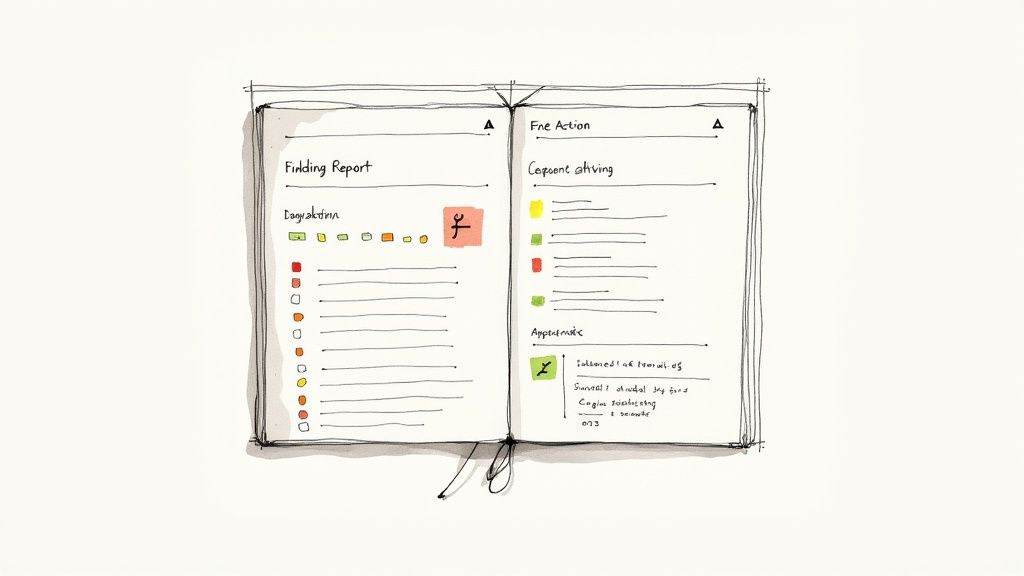
For a startup where engineering resources are precious, this clarity is everything. A well written report empowers developers to fix issues quickly and correctly the first time, preventing wasted cycles and reducing the time you are exposed. This focus on clear, actionable guidance is a core part of modern penetration testing best practices, transforming the test from a simple audit into a collaborative security improvement exercise. It is the difference between a report that gets filed away in a drawer and a report that actually drives meaningful change.
Why This Matters So Much
Actionable reporting is the engine that turns a pen test's findings into real security improvements. It provides a clear business case for fixing things by linking technical vulnerabilities to potential impact, like data breaches or service downtime. This lets stakeholders prioritize fixes based on risk, not just technical severity. For developers, specific guidance and proofs of concept remove ambiguity and speed up the patching process, fostering a positive security culture rather than an adversarial one.
How to Actually Do It
To make sure your reports are clear, comprehensive, and drive action, they should include:
- Audience Specific Summaries: Start with a high level executive summary for leadership, then provide a detailed technical breakdown for the engineering and operations teams.
- Detailed Vulnerability Descriptions: For each finding, include the vulnerability name (e.g., Cross Site Scripting), its CWE/CVE reference, a risk rating (e.g., CVSS score), and the potential business impact.
- Proof of Concept (PoC): Provide screenshots, video recordings, or code snippets that show exactly how the vulnerability was exploited. This is crucial for validation and making it easy for devs to replicate.
- Step by Step Remediation: Offer specific, practical steps to fix the issue. For a password hashing bug, you might reference materials on how to securely store passwords in a database. For a misconfiguration, provide the exact commands or config lines to change.
- Prioritization: Clearly rank findings from critical to low, helping teams focus their efforts on the biggest risks first.
8. Check the Locks: Test Authentication and Session Management
Authentication and session management are the digital gatekeepers of your application. If they fail, everything behind them is exposed. Rigorously testing these parts is not just about checking if a login works; it is about actively trying to subvert, bypass, and manipulate the mechanisms that control who gets access to what. These systems are prime targets for attackers because a single flaw, like a predictable session token or a weak password reset function, can lead to a complete account takeover.
From a compliance perspective, robust authentication is a non negotiable requirement for standards like PCI DSS and HIPAA, which require strict controls to protect sensitive data. For a startup, a breach that comes from a simple authentication flaw can be devastating to user trust and your brand's reputation. The goal is to make sure that a user's identity is correctly verified and that the session they get after login stays secure and isolated, preventing hijacking, fixation, or privilege escalation.
Why This Matters So Much
Flaws in authentication and session management are consistently ranked among the most critical web application vulnerabilities by OWASP. This makes it a foundational element of penetration testing best practices. A small oversight here can invalidate every other security control you have. Thorough testing ensures that you are not just building high walls but also making sure the gates are locked, guarded, and work correctly under pressure. It moves security from a theoretical checklist to a practical, battle tested reality.
How to Actually Do It
To effectively test these critical components, your testing plan should include:
- Credential Lifecycle Testing: Vigorously test all user account functions, including registration, password complexity rules, password reset logic (I have seen so many bypasses here), and account recovery mechanisms.
- Session Token Analysis: Examine session tokens (like cookies or JWTs) for randomness and unpredictability. Check for weak signing keys, insecure attribute flags (like
HttpOnlyandSecure), and whether they are properly invalidated on logout. You can explore a guide to Django REST framework authentication to see how modern frameworks handle these. - Access Control Validation: Test for both vertical (e.g., a standard user trying to access admin functions) and horizontal (e.g., user A trying to access user B's data) privilege escalation.
- MFA Implementation Review: Go beyond just checking if MFA exists. Try to bypass it, test if it is enforced on all sensitive actions, and check the security of its recovery process.
- Logical Flaw Detection: Probe for business logic flaws, like being able to reuse a one time password or manipulate multi stage login processes.
9. Show, Don't Just Tell: Controlled Exploitation
Identifying a vulnerability is one thing; proving its real world impact is another. This is where controlled exploitation comes in, turning a theoretical weakness into a tangible proof of concept (PoC). Instead of just reporting a potential SQL injection, you show exactly how it can be used to pull specific data out of the database. This step is the definitive proof that separates low risk findings from critical, "fix this now" emergencies. It validates the vulnerability's severity and provides undeniable evidence for stakeholders.
This practice moves beyond the automated scanner results, which often cry wolf with false positives, to confirm genuine, exploitable risks. For a startup, this means you can prioritize engineering resources effectively. Rather than chasing down every "medium" finding from a scanner, you focus on the validated threats that could actually lead to a data breach. Controlled exploitation is a precise, surgical operation, not a brute force attack. It is designed to demonstrate impact without causing any collateral damage.
Why This Matters So Much
Validating vulnerabilities with a PoC is a core component of effective penetration testing best practices because it translates abstract risks into concrete business impact. It answers the "so what?" question for executives and gives developers the exact replication steps they need for a swift, accurate fix. This process eliminates any debate over a finding's severity and speeds up the remediation cycle, ensuring the most critical issues get immediate attention.
How to Actually Do It
To do this safely and effectively, your team should:
- Establish Success Metrics: Before you try an exploit, clearly define what success looks like. Is it gaining read access to a specific database table, executing a single command, or escalating privileges to a certain user?
- Use Isolated Environments: Whenever possible, replicate the vulnerability and perform the initial exploitation in a non production, sandboxed environment to prevent any impact on live services.
- Document Every Step: Meticulously record every command, script, and action you take during the exploitation process. This documentation is crucial for the final report and for developers trying to reproduce the issue.
- Employ Non Destructive Payloads: For initial validation, use harmless payloads like
whoamioridcommands to prove you can execute code without altering or deleting data. Crafting these often involves skills like running PowerShell scripts to demonstrate impact safely. - Limit the Blast Radius: Strictly stick to the agreed upon scope. Never pivot or try to exploit systems that are out of bounds, even if you find an easy path to do so.
- Maintain Rollback Plans: Have a clear plan to revert any changes you made during exploitation, ensuring the system can be returned to its original state.
10. The Job Isn't Done: Review, Validation, and Follow Up
The penetration test is not over when you deliver the final report. The true value is realized in the post engagement phase, where findings are validated, fixes are tracked, and lessons are integrated back into the development lifecycle. This follow up transforms a one time security snapshot into a continuous improvement cycle, which is essential for maturing a security program. It is the difference between a doctor handing you a diagnosis and one who also schedules follow up appointments to see if the prescription is working.
This process is critical for proving due diligence and achieving compliance with frameworks like SOC 2 and ISO 27001, which require evidence that you are actually managing and remediating vulnerabilities. For startups, establishing this feedback loop early on builds a resilient security culture and prevents the same bugs from popping up again in future sprints. It ensures that the investment in the pen test yields a measurable reduction in risk over time, rather than just producing a static report that nobody acts on.
Why This Matters So Much
A structured post test process is a hallmark of mature penetration testing best practices. It ensures accountability, provides measurable security metrics like Mean Time To Remediate (MTTR), and validates the effectiveness of your security controls. This continuous engagement fosters a strong partnership between the security team and developers, turning the test from a "gotcha" exercise into a collaborative effort to build more secure products.
How to Actually Do It
To effectively manage the post test lifecycle, your process should include:
- Debrief and Q&A Session: Schedule a meeting with developers and system owners to walk through the findings, answer their technical questions, and clarify the remediation steps.
- Validation and Retesting: Plan for a retest of the patched vulnerabilities, typically 2 to 4 weeks after the initial report. This confirms that the fixes actually work and have not introduced new issues.
- Track Key Metrics: Monitor and report on metrics like the number of vulnerabilities closed, the average time to remediate critical findings (MTTR), and the overall risk reduction percentage.
- Trend Analysis: Over multiple tests, analyze trends to identify recurring types of vulnerabilities. This data can inform targeted developer training and help you improve your tools.
- Establish Remediation SLAs: Define and enforce Service Level Agreements (SLAs) for fixing vulnerabilities based on their severity (e.g., critical issues must be patched within 14 days).
- Document Lessons Learned: Conduct a retrospective to capture insights from the engagement that can improve your security architecture, developer education, and future testing scopes.
10-Point Penetration Testing Best Practices Comparison
| Practice | Implementation complexity | Resource requirements | Expected outcomes | Ideal use cases | Key advantages |
|---|---|---|---|---|---|
| Obtain Written Authorization and Scope Definition | Medium — legal review and stakeholder alignment | Legal counsel, RoE templates, executive time | Clear legal protection and defined testing boundaries | Any formal engagement, regulated environments | Legal compliance, scope clarity, stakeholder alignment |
| Conduct Thorough Reconnaissance and Information Gathering | Medium — combines automated and manual effort | OSINT tools, scanners, analyst time | Comprehensive attack surface map and target list | Initial phases, red team ops, large networks | Early discovery of exposures, informed test planning |
| Perform Vulnerability Assessment and Analysis | Medium–High — scanning plus manual verification | Vulnerability scanners, analysts, CVE/CVSS references | Prioritized vulnerability inventory with severity ratings | Baseline assessments, compliance checks, pre-exploit | Comprehensive discovery, remediation prioritization |
| Employ a Methodical Testing Approach with Defined Phases | Medium — process design and control gates | Frameworks (OWASP/NIST), experienced testers, documentation | Repeatable, traceable testing with controlled escalation | Structured audits, complex engagements, regulated tests | Coverage consistency, reproducibility, risk management |
| Prioritize Risk-Based Testing with Impact Assessment | Medium — requires business context | Stakeholder input, risk models, asset inventories | Focused testing on highest-impact assets, improved ROI | Limited resources, business-critical systems | Maximizes value, aligns testing with business risk |
| Maintain Operational Awareness and Avoid Service Disruption | Medium–High — coordination and monitoring needed | NOC coordination, monitoring tools, rollback plans | Minimal production impact and preserved availability | Production testing, live systems, critical services | Protects uptime, reduces business impact, builds trust |
| Document Findings with Clear, Actionable Remediation Guidance | High — detailed, multi-audience reporting | Skilled technical writers, PoCs, reporting templates | Actionable remediation roadmaps and compliance evidence | Post-test handoff, developer remediation, audits | Faster remediation, clearer communication, compliance support |
| Test Authentication and Session Management Rigorously | Medium — specialized test cases and care | Test accounts, identity team coordination, auth tools | Hardened auth/session controls and reduced access risk | Apps handling sensitive data, identity systems | Prevents common vectors, validates access controls |
| Execute Controlled Exploitation with Proof-of-Concept Validation | High — skilled, risky, tightly controlled | Isolated labs, backups/snapshots, senior testers | Verified exploitability and demonstrable business impact | High-assurance testing, validation of critical findings | Concrete evidence, validates severity, reveals chaining |
| Conduct Post-Test Review, Validation, and Follow-Up Engagement | Medium — coordination and ongoing effort | Time for re-testing, metrics tracking, stakeholder meetings | Verified remediation, trend metrics, continuous improvement | Long-term programs, compliance cycles, remediation verification | Ensures fixes, measures progress, strengthens security culture |
Your Next Move: Making Security Part of Your DNA
We have walked through the entire penetration testing lifecycle, from that crucial first step of getting written permission all the way to the final, vital phase of validating the fixes. It is a journey that, when done right, transforms security from a stressful, reactive firefight into a proactive, manageable process. We have seen how meticulous scoping saves you from headaches, how methodical testing uncovers what you would otherwise miss, and how clear reporting turns findings into fixes. The core lesson is this: a penetration test is not just a technical audit; it is a strategic conversation about risk, resilience, and the health of your systems.
Think of it like this: you would not build a skyscraper without an architect's blueprint and regular structural checks. In the same way, you cannot build a scalable, trustworthy startup without embedding security into its foundation. The penetration testing best practices we have covered are your architectural blueprints for a robust security posture. They give you the framework to ask the right questions, test the right assumptions, and build systems that can stand up to real world attacks, especially in the complex worlds of GenAI, cloud infrastructure, and modern web applications.
Shifting from a Checklist to a Culture
The biggest leap your startup can make is moving beyond seeing pen testing as a periodic, compliance driven chore. The real goal is to cultivate a security first mindset within your engineering team. This is where the magic happens.
- From Event to Process: Instead of one big, scary annual test, integrate smaller, continuous security validation into your development lifecycle. Think automated SAST/DAST scans on every pull request, and quarterly, targeted pen tests on new, high risk features.
- From "Us vs. Them" to "We": The best security programs tear down the wall between developers and security testers. When a pentester files a bug, it should feel the same as when a QA engineer files a functionality bug. It is a shared goal: build a better, more secure product.
- From Fear to Curiosity: Encourage your developers to think like attackers. Host internal Capture The Flag events, run threat modeling sessions for new features, and celebrate when team members find and fix security issues before they ever reach production.
By internalizing these practices, you are not just patching vulnerabilities; you are building an organizational immune system. Each test, each finding, and each remediation cycle makes your team smarter, your processes stronger, and your product more resilient. This is how you turn security from a cost center into a competitive advantage and a core part of your brand's promise to its users.
Mastering these penetration testing best practices ensures you are not just checking a box. You are building a durable, secure foundation that lets you innovate faster and with more confidence. You are preparing your startup not just to survive, but to thrive in a world where security is non negotiable. The journey from a vulnerable system to a fortified one begins with a single, well planned step. Your next move is to take that step, turning this knowledge into action and making security an inseparable part of your company's DNA.
Building a secure foundation from the ground up, especially with complex Django and GenAI systems, can be daunting. As a consultant, I partner with CTOs and founders to embed these security practices directly into their architecture and development workflows. If you are looking for a guide to help you build secure, scalable, and production ready systems, connect with me at Kuldeep Pisda.
Subscribe to our newsletter.
Become a subscriber receive the latest updates in your inbox.


Member discussion